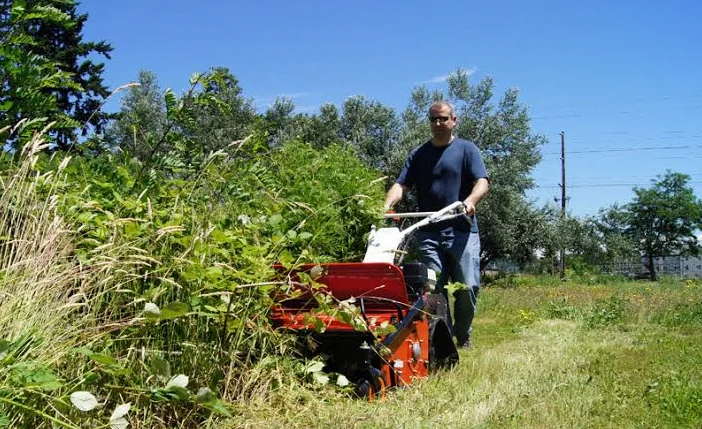
What are the signs you need Brush Clearing?
You need brush clearing when vegetation gets thick enough to block sunlight, trap moisture against your house, or create a clear path for fire to reach your home. In Birmingham, that usually means vines climbing siding, brush touching windows, or a wall of privet and kudzu that you can't see through.
Walk your property line once a month, especially after a wet spring. If you have to push branches out of your face to get to the back corner, you have a brush problem. Birmingham's red clay and long growing season mean stuff that was knee high in April can be over your head by July.
Look for vegetation that is within three feet of your foundation. That includes bushes, weeds, and ground cover that holds moisture against the brick or siding. In older neighborhoods like Crestwood or Forest Park, foundation moisture from brush is a common reason for termite treatments.
Check your roofline from the street. If you see vines creeping up the corners of your gutters or wrapping around chimney flashing, they are already doing damage. English ivy and Virginia creeper will lift shingles and pry open gaps that let water into your attic.
Pay attention to how your yard feels. If the air around your back porch is still and humid even on a breezy day, the brush is blocking airflow. That trapped humidity feeds mold on your siding and makes your AC work harder.
Notice if you have stopped using parts of your yard. When the path to the shed is overgrown or the kids won't play in the side yard because of ticks, you have waited too long. Brush clearing is not just about looks, it is about using the land you own.
The warning signs to watch for
Watch for vines on siding, brush touching windows, deadwood piled near the foundation, and any vegetation that blocks your view of the street from your driveway. These are the early signs that brush is moving from nuisance to hazard.
Vines are the fastest way brush damages a house. A single kudzu vine can grow a foot a day in July. If it gets behind your gutters or under your siding, it will pull things apart. Catch it when it is still on the ground, not when it has reached the roofline.
Brush that touches windows is a direct path for insects. Ants, roaches, and spiders use branches as bridges. In Birmingham, that also means snakes. A branch resting on a ground level window is an invitation for a rat snake to follow the scent of mice inside your wall.
Deadwood and leaf litter piled against the foundation traps moisture. That damp zone is where termites start their tunnels. If you see mud tubes on your foundation wall, you have a moisture problem that brush is making worse.
Blocked sightlines are a safety issue. If you cannot see the street from your driveway because of overgrown brush, you cannot see a child or a pet before you back out. In neighborhoods like Homewood or Mountain Brook with narrow drives, this is a real risk.
Look for thin or dying grass under dense brush. That means the brush is stealing all the light and water. Once the grass dies, erosion starts. On Birmingham's hillsides, bare soil under brush can lead to gullies that undermine your foundation.
What causes these problems in Birmingham
Birmingham's climate is the main cause. We get over 50 inches of rain a year and mild winters, so brush grows almost year round. The red clay soil holds moisture, and invasive species like privet, kudzu, and Chinese wisteria outcompete native plants and take over fast.
The combination of heat and humidity means a neglected lot can go from clear to jungle in one growing season. If you skip a summer of maintenance, you are not just a year behind. You are starting over. That is why regular clearing matters more here than in drier parts of the country.
Invasive species are a huge part of the problem. Privet was planted as hedges decades ago and has escaped into every vacant lot and creek bank in the city. It forms thickets so dense that nothing else grows underneath. Kudzu covers trees and kills them by blocking light. Both spread from neighboring properties if you do not maintain your own boundary.
Birmingham's topography makes it worse. Properties on slopes shed water onto lower lots, so brush at the bottom of a hill grows faster and thicker. If your house sits below a neighbor's overgrown lot, you are getting their runoff and their seeds.
Older neighborhoods have mature trees that drop leaves and limbs, creating a thick layer of organic matter that feeds brush. In areas like Avondale or Highland Park, the canopy is so dense that brush grows leggy reaching for light, which makes it weak and prone to falling on fences or structures.
Development patterns also play a role. Many Birmingham lots have narrow side yards and shared driveways where brush gets ignored because it is hard to access. Those forgotten strips become seed banks that reinfest the rest of the yard every spring.
What happens if you ignore the signs
Ignoring brush buildup leads to foundation damage from trapped moisture, termite infestations, fire hazard, and loss of property value. In Birmingham, the biggest risk is that a small brush fire from a discarded cigarette or lightning strike turns into a house fire.
Moisture is the slow killer. When brush holds water against your foundation for months, the brick mortar softens and cracks. Water seeps into the crawlspace, where it rots floor joists and attracts termites. A termite treatment in Birmingham runs hundreds of dollars, but repairing rotted framing costs thousands.
Fire risk is real, even in the city. Birmingham Fire and Rescue responds to brush fires every dry season. If your yard is choked with dead vines and dry leaves, a spark from a grill or a power tool can ignite a fire that travels up the brush to your eaves. That is how house fires start in suburban neighborhoods.
Pests move in when brush gives them cover. Rats, mice, and snakes all thrive in overgrown lots. Once they establish a population in the brush, they start looking for a way into your house. In Birmingham, the Norway rat is common in older neighborhoods and will chew through plastic pipes and electrical wires.
Your property value takes a hit. A house with an overgrown lot looks neglected, and appraisers notice. If you are trying to sell, buyers will assume the foundation and roof have hidden damage. In a market like Birmingham where curb appeal matters, a brushy yard can knock thousands off your offer.
Your neighbors get frustrated. Birmingham has a nuisance ordinance that requires property owners to keep vegetation under 12 inches in the front yard. If you ignore it, the city can send a crew to clear it and bill you, plus a fine. That is more expensive than hiring a brush clearing company yourself.
Common questions about Brush Clearing warning signs
Need brush clearing in Birmingham? Get a free estimate today.
📞 256-588-8791