What is Right-of-Way Clearing and how does it work?
Right-of-way clearing is the removal of trees, brush, and overgrowth along utility lines, roads, or shared access paths. It keeps power lines safe, prevents fire hazards, and maintains legal access across your property or a neighbor's.
In Birmingham, right-of-way clearing usually targets the strip of land that holds power poles, underground cables, or a drainage easement. That strip might be 10 to 50 feet wide. If you own a home in a neighborhood like Crestline or Forest Park, you probably have a utility right-of-way running along your back fence line or the side of your lot.
The utility company or the city owns the easement, but you as the homeowner are often responsible for keeping vegetation off it. That is where a brush clearing crew comes in. We cut back trees that lean toward the lines, remove thick underbrush that blocks a lineman's access, and grind stumps that could trip a mower or a truck.
Most homeowners do not realize that a right-of-way is not the same as a property line. You can plant flowers there, but if that oak sapling grows into the power lines, the utility has the right to cut it down without asking you first. Right-of-way clearing is about staying ahead of that conflict.
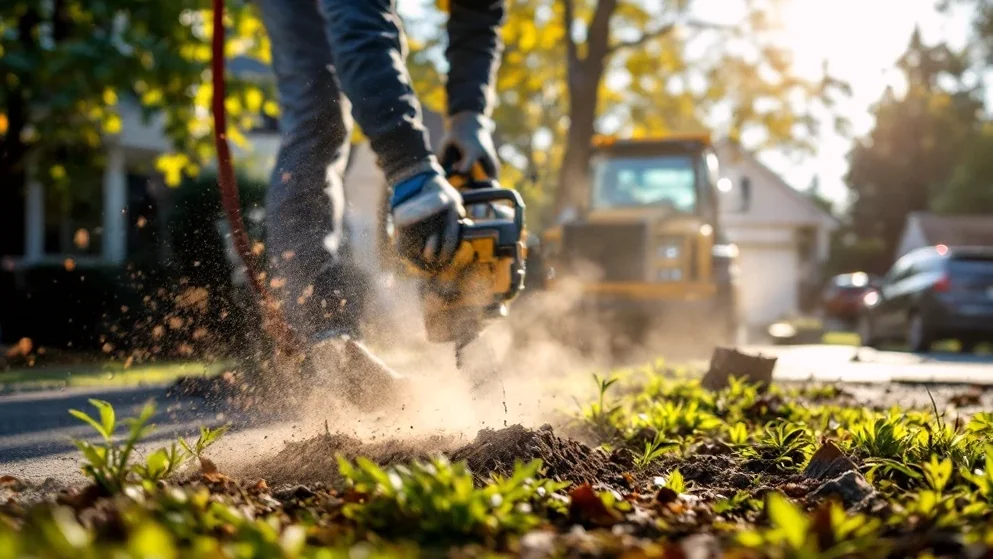
The work itself involves chainsaws, brush cutters, and sometimes a small skid steer if the terrain is flat enough. On steep Birmingham hillsides, the crew works by hand and hauls debris out in tarps. The goal is to leave a clean, open corridor that a person or a vehicle can walk through without fighting briars and poison ivy.
A typical right-of-way clearing job on a standard Birmingham lot takes one to two days. Heavier sites with dense kudzu or multiple large trees can stretch to three or four. The crew marks the boundaries with flagging tape before they start so everyone knows exactly where the clearing stops.
How Right-of-Way Clearing works, step by step
The process starts with marking the right-of-way boundaries, then cutting and removing vegetation, grinding stumps, and finally cleaning up so the corridor is safe and accessible for both people and equipment.
Step one is a walkthrough with the homeowner or the utility representative. We look at the property survey or the recorded easement map to find the exact limits of the right-of-way. On older Birmingham lots, the pins might be buried under decades of leaf litter, so we use a metal detector to locate them.
Once the boundaries are clear, the crew flags them with bright orange tape. That tape is your reassurance that we are not cutting your prized azaleas or that dogwood you planted near the fence. We only work inside the flagged zone.
Next comes the heavy cutting. Trees that lean more than fifteen degrees toward the power lines get taken down first. We limb them, section the trunk, and haul the wood to a chipper. For smaller brush like privet hedge, kudzu vines, and blackberry thickets, we use gas-powered brush cutters with steel blades. Those can chew through two-inch stalks in seconds.
Stump grinding is the part most homeowners skip and then regret. A stump left at ground level will resprout within a year, especially in Birmingham's humid climate. We grind every stump down to six inches below grade. That stops regrowth and leaves a smooth surface that you can mow over without hitting a hidden lump.
After the grinding, we rake the area and pick up every piece of debris bigger than a soda can. The chips either get spread as mulch along the edge of the clearing or hauled away if you prefer a bare look. We do a final pass with a leaf blower to clear the driveway or sidewalk.
The last step is a final walkthrough with you. We show you the cleared corridor, point out any remaining hazards like a dead limb high in a tree that we could not reach, and explain what maintenance you will need to do in the next year or two.
- Boundary marking with survey-grade flagging tape
- Removal of leaning trees and overhanging limbs
- Brush cutting with gas-powered steel-blade cutters
- Stump grinding to six inches below grade
- Debris hauling and site cleanup
Why Right-of-Way Clearing matters for your home
Clearing your right-of-way prevents power outages during storms, reduces fire risk from dry brush, keeps utility workers safe when they need to make repairs, and protects your property value by maintaining clear access.
Birmingham gets its share of severe weather. A derecho or a thunderstorm with sixty-mile-an-hour winds will snap a dead limb and drop it right across a power line. If that limb is inside your right-of-way and you have not cleared it, the utility may not be able to restore power until you do. That can mean an extra day without lights or AC in August.
Dry brush and overgrown grass in the right-of-way act as fuel for a fire. A discarded cigarette or a spark from a mower blade hitting a rock can ignite it. In neighborhoods that back up against wooded areas, like those near Red Mountain, a right-of-way fire can spread into the treeline and threaten homes.
Utility workers need a clear path to reach poles and transformers. If your right-of-way is choked with briars and poison ivy, a lineman cannot safely walk to the pole. That delays repairs for you and your neighbors. In an emergency, every minute counts.
A well-maintained right-of-way also keeps your property looking cared for. Overgrown easements make a house look neglected. When you go to sell, a potential buyer will notice the jungle along the fence line and wonder what else has been ignored. Clearing it is a cheap way to improve curb appeal.
There is a legal side too. If your overgrown right-of-way causes damage to a utility pole or a neighbor's fence, you could be liable. Most homeowner insurance policies expect you to maintain the property, and an easement is still your property.
- Prevents storm-related power outages
- Reduces wildfire risk near homes
- Ensures safe access for utility crews
- Improves curb appeal and property value
- Limits legal liability for damage
Common problems and what causes them
The most frequent issues are resprouting stumps, erosion after clearing, disputes with neighbors over boundary lines, and regrowth of invasive species like kudzu and privet that take over within a season.
Resprouting stumps are the number one complaint we hear. A homeowner cuts a tree and leaves the stump at ground level, thinking it is dead. Within weeks, the stump sends up shoots. Within a year, you have a bush that is thicker than the original tree. The fix is grinding the stump below grade, which kills the root system for good.
Erosion is another surprise. When you clear a hillside right-of-way, the soil that was held by roots suddenly has nothing to anchor it. The first heavy rain can wash a gully across your yard. We always recommend seeding the cleared area with a fast-growing grass like Bermuda or fescue within a week of clearing.
Boundary disputes come up more than you would think. A neighbor might have planted a hedge that encroaches into your right-of-way, or the survey pins are buried and no one knows exactly where the line falls. The solution is to get a current survey before any work starts. Paying for a survey is cheaper than a lawsuit.
Invasive species are a constant battle in Birmingham. Kudzu can grow a foot a day in July. Privet forms a dense thicket that chokes out native plants. If you clear a right-of-way and do not treat the ground with an appropriate herbicide, those species will be back in two years. A follow-up treatment in the spring is usually necessary.
Many homeowners also underestimate how much debris a clearing job produces. A hundred-foot stretch of overgrown right-of-way can fill a dump truck with brush and logs. If you try to haul it yourself, you might need multiple trips to the landfill. A professional crew handles that on the spot.
Common questions about Right-of-Way Clearing
Frequently Asked Questions
Do I need permission from the utility company before I clear my right-of-way?
You generally do not need permission to clear vegetation on your own property, but you should call your utility company if you plan to remove a tree that is touching or near power lines. They may send a crew to de-energize the line or do the work themselves. Never cut a limb that is within ten feet of a live wire.
How often should I clear my right-of-way?
Most Birmingham properties need a full clearing every three to five years. If you have fast-growing species like kudzu or privet, you may need a spot treatment every year. A light trimming of new growth every spring keeps the heavy work to a minimum.
Can I clear the right-of-way myself with a chainsaw and a mower?
You can, but it is hard work and risky if you are not used to a chainsaw or working on uneven ground. Poison ivy and yellow jackets are common in overgrown rights-of-way. If you have a small area and good equipment, go ahead. For anything over a quarter acre, hiring a crew is safer and faster.
What if my neighbor's trees overhang my right-of-way?
You have the right to trim any branches that cross your property line or extend into your easement, but you cannot cut the tree down or trim it back past the property line. Talk to your neighbor first. If they refuse, you can trim the overhanging limbs yourself as long as you do not damage the tree.
Will clearing the right-of-way hurt my property value?
No, it usually helps. A clear, maintained easement looks better and signals to buyers that you take care of the property. The only exception is if you remove a large, healthy shade tree that was providing cooling. In that case, you might want to plant a smaller ornamental tree well outside the right-of-way to replace it.
How do I find the exact boundaries of my right-of-way?
Look at your property survey, which you should have received when you bought the house. It will show the easement as a dashed line. If you cannot find the survey, check with the Jefferson County tax assessor's office or your title company. A land surveyor can also locate the pins for a fee.
What happens if I ignore the right-of-way and the utility company needs to work there?
The utility company can enter your property to do emergency work, and they will cut whatever they need to without asking. They are not responsible for landscaping or cleanup beyond what is necessary. You could end up with a mess and no recourse.
Can I build a fence or a shed on my right-of-way?
No. A right-of-way is an easement that must remain open for utility access. Building a structure on it violates the easement agreement and the utility can force you to remove it at your own cost. Always check your survey before putting up any permanent structure.
What is the best time of year to clear a right-of-way in Birmingham?
Late winter or early spring, before the leaves come out and before kudzu starts its rapid growth. The ground is usually firm enough for equipment, and you can see the structure of the trees clearly. Fall is also good, but you want to be done before the leaves drop and cover the stumps.
Do you use chemicals to prevent regrowth?
We can apply an appropriate herbicide to cut stumps and invasive species like privet and kudzu. We always follow the label and use products that are safe for the environment. If you prefer no chemicals, we can grind the stumps and seed the area instead, but you will need to stay on top of hand-pulling new sprouts.
Need brush clearing in Birmingham? Get a free estimate today.
📞 256-588-8791