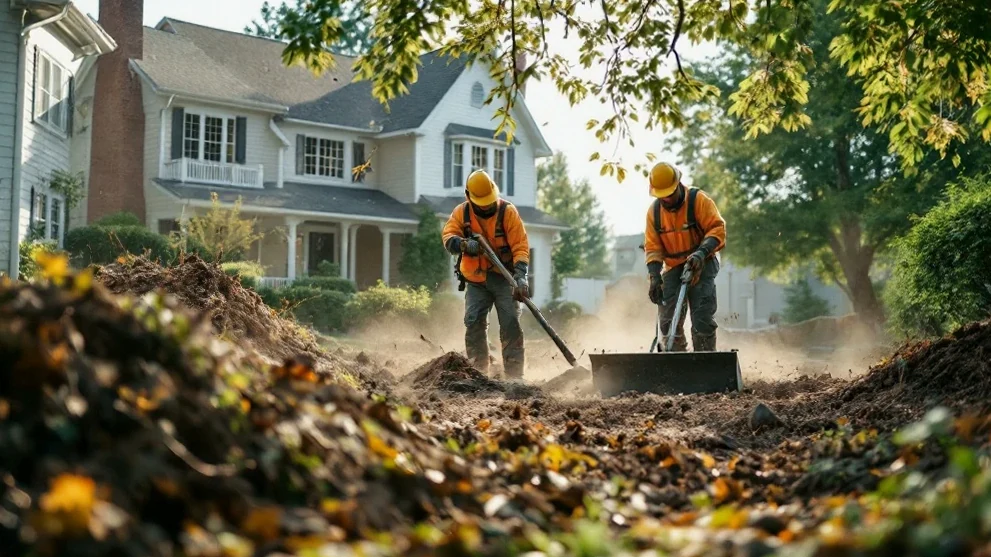
What is Commercial Land Clearing and how does it work?
Commercial land clearing is the large scale removal of trees, brush, stumps, and debris from a property to prepare it for development or major landscaping. It uses heavy equipment like bulldozers and excavators, not hand tools, and follows strict local rules in Birmingham.
Think of it as the heavy lift version of brush clearing. Where a typical brush clearing job might tackle an overgrown backyard with chainsaws and a chipper, commercial land clearing brings in machines that can push over a dozen trees in an hour. It is the first step before any construction, whether that is a new subdivision, a shopping center, or a big home addition on a wooded lot.
In Birmingham, the scale matters. A lot in Crestline or Mountain Brook that backs up to a forested ravine might need commercial clearing just to get a foundation dug. The same goes for a vacant parcel in Hoover or Trussville where you plan to build. The work is not just cutting trees. It includes grubbing out roots, leveling the ground, and hauling off everything so you have a clean, buildable surface.
Most homeowners picture a crew with chainsaws and a chipper. That is brush clearing. Commercial land clearing is different. It uses track hoes, skid steers, and sometimes dozers. The crew does not stop at the tree line. They scrape the topsoil, pull stumps, and grade the site so water drains away from where your house will sit.
Permits are part of the deal too. Birmingham and surrounding cities have rules about stormwater runoff, protected trees, and erosion control. A commercial land clearing company handles those permits as part of the job. You do not want to find out after the fact that you needed a silt fence or a tree preservation plan.
The end result is a site that is ready for the next step. That might be a foundation pour, a gravel driveway, or a large garden. But the key is that commercial clearing is not a quick fix. It is a thorough, machine driven process that changes the land itself.
How Commercial Land Clearing works, step by step
Commercial land clearing follows a set sequence: site assessment and permitting, tree removal, stump grinding and grubbing, debris hauling, and final grading. Each step is done with heavy equipment and follows Birmingham's local codes.
Step one is the site walk. A crew lead from Birmingham Brush Clearing walks the property with you and marks boundaries, identifies any protected trees or wetlands, and checks access for equipment. This is where you learn if the lot has a steep slope that needs a different machine or if there is a gas line you need to avoid. The walk takes an hour or two for a typical residential lot.
Permitting comes next. Birmingham requires a land disturbance permit for any site over one acre. Smaller lots in places like Homewood or Vestavia Hills might need a stormwater permit if the work disturbs more than 5,000 square feet. The company pulls those permits and posts the required erosion control measures like silt fencing before any machine touches the ground.
Tree removal starts with the big stuff. A track hoe with a thumb attachment grabs trees at the base and pulls them out, roots and all. For trees too close to a house or a power line, a crew with chainsaws fells them by hand first. In a typical Birmingham lot with mixed hardwoods and pines, the machine work takes one to three days.
Stump grinding and grubbing is the messy part. After the trees are gone, the stumps get ground down to at least six inches below grade. The grinder chews through oak and pine alike, leaving a pile of chips. Then a skid steer with a root rake pulls out the remaining roots and rocks. This step is what separates a clean site from a rough one.
Debris hauling is straightforward. All the wood, chips, and roots get loaded into dump trucks and hauled to a disposal site or a biomass facility. In Birmingham, there are a few places that take clean wood waste. The crew makes several trips, and the pile shrinks fast.
Final grading smooths the site. A dozer or grader spreads the remaining soil and creates a gentle slope away from where the structure will go. This prevents water from pooling against the foundation later. The grade is subtle, maybe a foot of drop over 50 feet, but it makes a real difference in a Birmingham clay soil that holds water.
Why Commercial Land Clearing matters for your home
Commercial land clearing matters because it sets the foundation for everything else on your property. A poorly cleared lot leads to drainage problems, foundation issues, and unexpected costs down the road. In Birmingham's clay soil and hilly terrain, doing it right the first time saves thousands.
Birmingham sits on a layer of heavy red clay that does not drain well. If you clear a lot by hand or with a small crew and leave roots and stumps in the ground, that clay will hold water against your foundation. Over a few years, you get cracks, a wet basement, or a slab that settles unevenly. Commercial clearing removes the organic material that rots and leaves voids.
The hilly terrain in places like Red Mountain or the Cahaba River valley adds another layer. A lot that slopes toward your house needs careful grading to redirect water. Commercial clearing equipment can cut a swale or build a berm that a hand crew cannot. That is the difference between a dry crawlspace and one that floods every time it rains.
Tree roots are stubborn. A pine stump left in the ground will rot over five to ten years, leaving a hole that fills with water and attracts termites. An oak stump takes longer but still decays. Commercial grinding gets the stump deep enough that you can plant grass or pour concrete over it without issues. Hand clearing often leaves stumps that settle and crack patios or driveways.
There is also the matter of debris. A commercial clearing job hauls off everything. A smaller operation might leave brush piles or chip material on site, which then rots and breeds mosquitoes. In Birmingham's humid summers, that is a problem. A clean site stays dry and usable.
Finally, commercial clearing gives you a clean canvas. If you plan to add a garage, a pool, or a garden shed later, the site is already graded and free of roots. You do not have to bring in another crew to redo what the first one skipped.
Common problems and what causes them
The most common problems with commercial land clearing in Birmingham are erosion, leftover stumps, poor drainage, and damage to neighboring properties. These usually come from skipping steps, using the wrong equipment, or not getting the right permits.
Erosion is the big one. Birmingham gets about 55 inches of rain a year, and a bare slope can wash away tons of topsoil in a single storm. If the crew does not put up silt fencing or straw wattles before clearing, that mud runs into storm drains and creeks. The city can fine the property owner and stop the work until it is fixed.
Leftover stumps happen when a crew grinds them too shallow. A stump ground to two inches below grade might look fine, but after a few rains the soil settles and the stump top shows through. Then you have a bump in your lawn that ruins mower blades. Commercial clearing grinds to at least six inches below grade, and deeper for areas that will get pavement.
Poor drainage after clearing is usually a grading mistake. If the final grade slopes toward the house or has low spots, water collects. In Birmingham clay, that water sits for days. The fix is to bring in fill dirt and regrade, which costs as much as the original clearing. Getting the grade right the first time avoids that.
Damage to neighbor's property happens when trees fall the wrong way or equipment gets too close to a property line. A good operator knows how to fell trees away from fences and houses, but tight lots in neighborhoods like Forest Park or Avondale leave little room for error. The crew should mark the property line and have a spotter watching.
Permit violations are another headache. Birmingham requires a land disturbance permit for clearing over one acre, and some suburbs like Mountain Brook have their own tree ordinances. If the company clears without the permit, the city can issue a stop work order and fine the homeowner. A reputable commercial clearing company pulls the permits and posts the bond.
Common questions about Commercial Land Clearing
Frequently Asked Questions
How long does commercial land clearing take for a typical Birmingham lot?
A half acre lot with moderate trees usually takes two to four days with a full crew and heavy equipment. A steep lot or one with many large oaks can take a week. The crew has to move slower on slopes and around obstacles like power lines.
Do I need a permit to clear land in Birmingham?
Yes, for most sites over one acre you need a land disturbance permit from the city. Smaller lots may need a stormwater permit if the disturbed area exceeds 5,000 square feet. Your clearing company should handle the permit process as part of the job.
Can I keep some trees on my lot during commercial clearing?
Yes, the crew can work around trees you want to save. They will flag those trees and avoid them with equipment. But the root zone is vulnerable, so the crew may need to hand dig near them to avoid damaging the roots.
What happens to all the trees and brush after clearing?
The wood is hauled to a disposal site or a biomass facility that chips it for fuel or mulch. Clean wood waste goes to a recycler. The crew does not leave piles on your property.
Will commercial clearing damage my driveway or sidewalk?
It can if the equipment drives over them. A good operator lays down steel plates or plywood to protect concrete and asphalt. The crew should walk the access route with you before starting to identify vulnerable spots.
How deep do you grind stumps?
At least six inches below the final grade. For areas that will get a driveway, patio, or foundation, we grind to twelve inches to prevent settling. Shallow grinding leaves bumps that show up later.
What if my lot has protected trees like an old oak or a dogwood?
Birmingham and some suburbs have tree preservation ordinances. The company checks with the city before clearing. Protected trees may need a buffer zone or a permit to remove. The crew marks them and works around them.
Do I need to be home during the clearing?
Not for the whole time, but you should be there for the first walk through and the final walk through. The crew will call you if an issue comes up, like a buried utility line or a property line dispute.
What is the difference between brush clearing and commercial land clearing?
Brush clearing uses hand tools and small equipment for light growth like vines and small trees. Commercial land clearing uses heavy machines for large trees, stumps, and grading. Brush clearing leaves stumps; commercial clearing removes them.
Will the cleared land be ready to build on immediately?
After final grading, the site is ready for a foundation or a driveway. But you may need a soil compaction test first, especially for a slab foundation. The clearing company can recommend a geotechnical engineer if needed.
Need brush clearing in Birmingham? Get a free estimate today.
📞 256-588-8791